
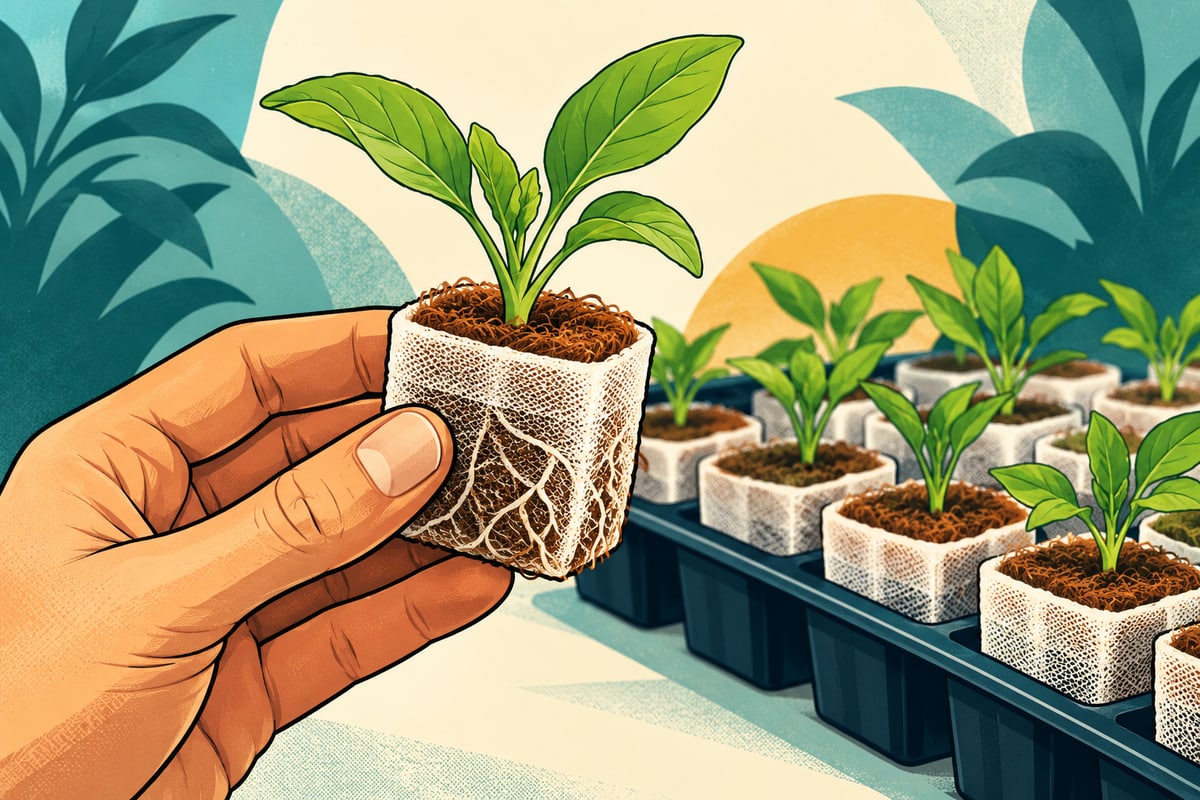
Choose the format around the next stage
Teral offers nonwoven propagation formats in 1, 1.5 and 2 US gallons, plus custom sizes. A shorthand request such as “10 × 15” needs units and the intended shape or third dimension before it becomes a complete order.
One US gallon is approximately 3.8 L; 1.5 US gallons is approximately 5.7 L; and 2 US gallons is approximately 7.6 L. These capacity labels do not define the exact outside dimensions of the finished unit. Confirm both capacity and dimensions when clearance matters.
Begin with the destination. A unit that will enter a planting opening has a different fit requirement from one being moved into a larger container. Include the receiving format in the enquiry so the cube is specified as part of that transition.
What to check in a nonwoven sleeve
Ask how the sleeve is intended to be handled during transfer and whether it should remain in place for the proposed application. Confirm material, seam construction and relevant handling requirements with the supplier. “Nonwoven” by itself does not establish biodegradability, compostability or suitability for every planting method.
Evaluate a sample in the actual nursery process. Can the team move it without losing shape or spilling the medium? Does it sit correctly on the intended support? Are the labels and sizes easy to distinguish? These checks turn a catalogue format into a workable production item.
Inspect the medium as well as the sleeve
The sleeve cannot compensate for a material grade that is unsuitable for the application. Request the particle specification, treatment and EC measurement basis for the coir inside it. If a nursery process needs closer control of long fibre or fines, make that part of the brief.
Our seedling substrate guide explains why texture and filling consistency deserve attention. Loose substrate, coins and cubes are different formats; they should not be assumed to have identical specifications because all contain coconut-derived material.
Use photographs to ask better questions
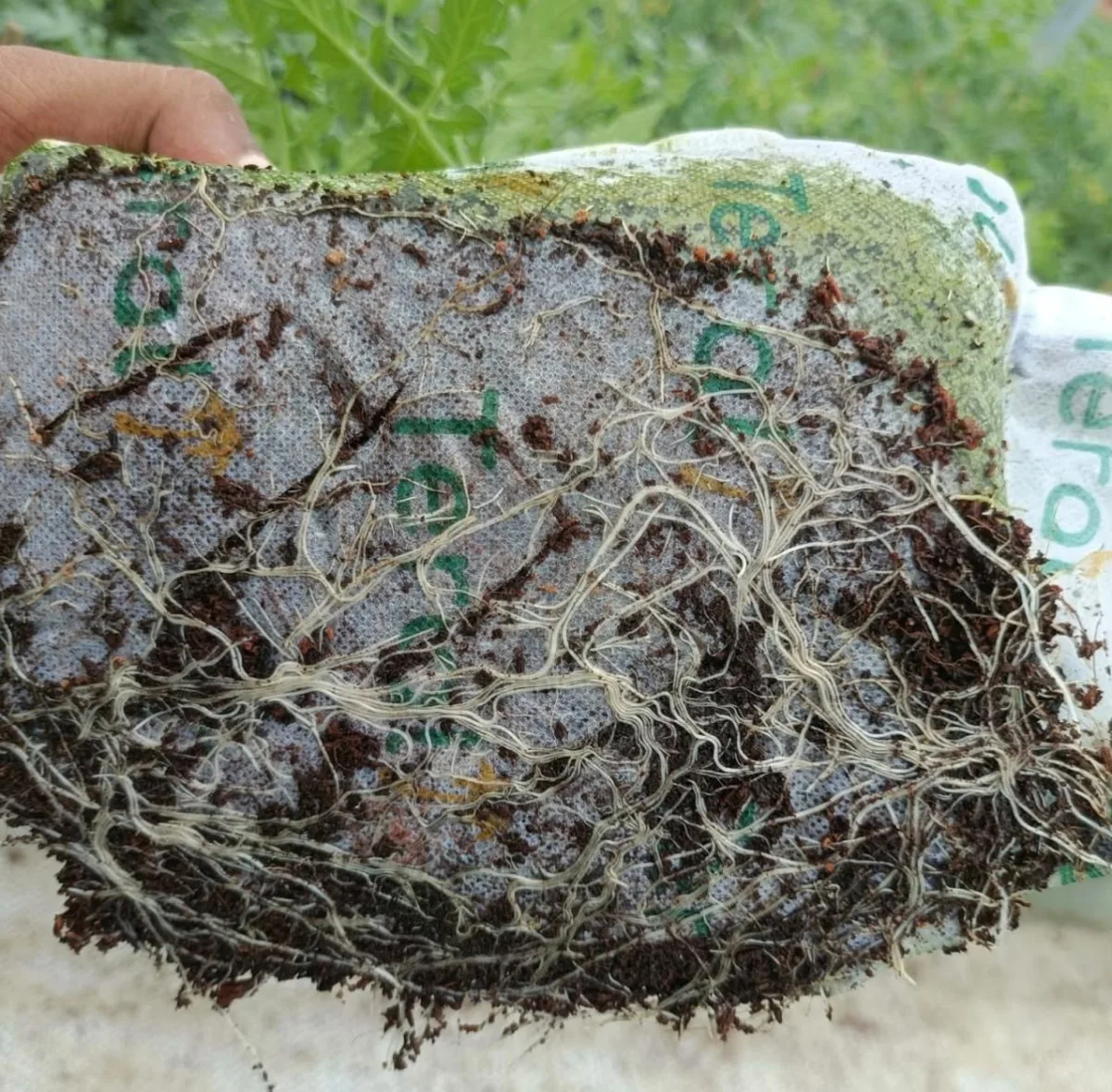
Root photographs are useful for seeing how a particular unit looks at a particular time. They do not establish uniform performance across a batch or tell you the full history of the plant. Combine visual inspection with records of the material, nursery conditions and handling procedure.
For a commercial evaluation, agree what success means before assessing the sample. It might include dimensional fit, integrity during transfer or consistency across units. A short, repeatable checklist is more useful than selecting a product because one image has especially striking roots.
Complete the specification before comparing prices
- Nominal capacity and expanded external dimensions, with units.
- Receiving container or planting-opening dimensions.
- Substrate particle grade and treatment.
- Nonwoven material and transfer instructions.
- Units per pack, order quantity and destination.
For custom 10 × 15 formats, explain exactly what those two numbers describe. The sales team can then help complete the remaining dimensions. For tray filling rather than individual units, compare the seedling substrate and coir coin options alongside cubes.
Technical references
Background reading from universities and horticultural research. Teral product options are subject to the agreed order specification.