
The growing environment
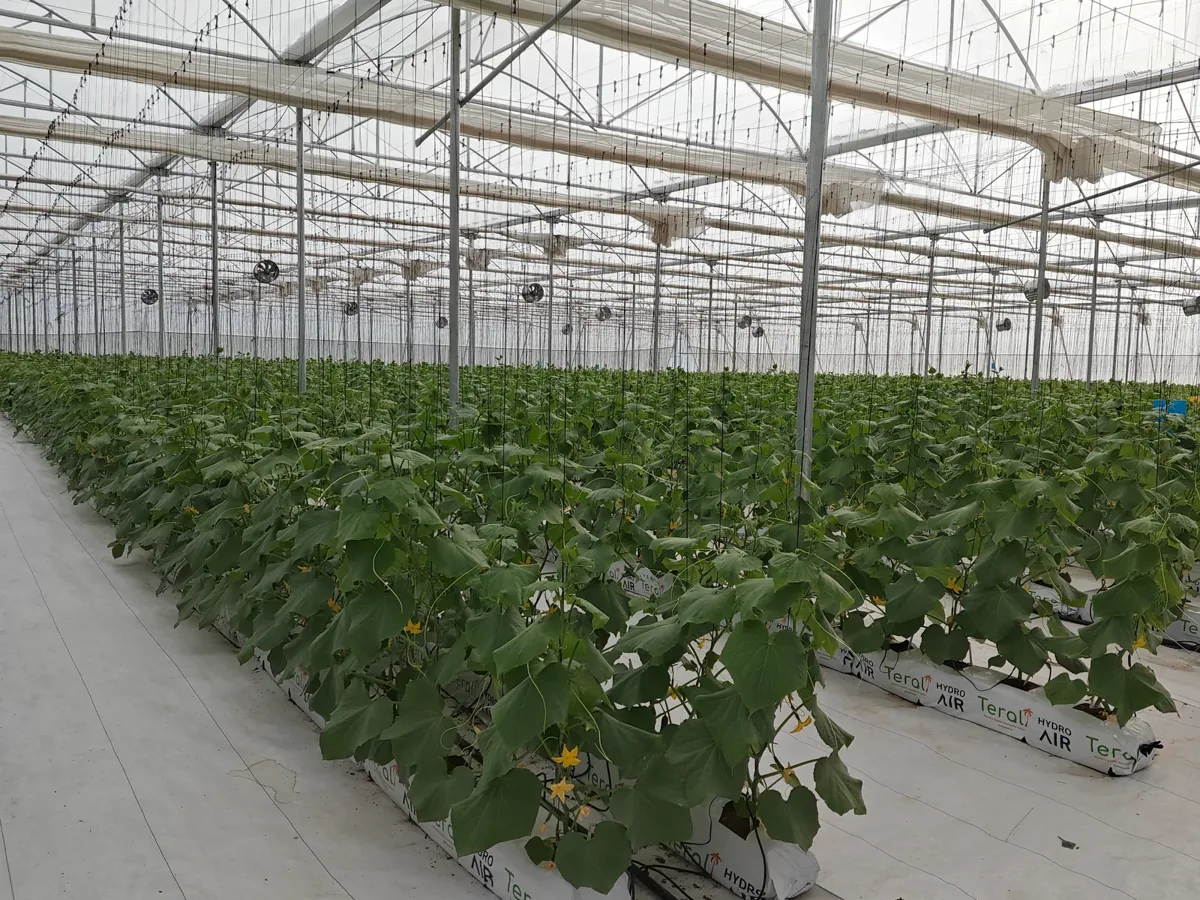
In a commercial greenhouse, the substrate sits within a much larger system. The farm photographs show long crop rows, overhead training strings, irrigation lines and clear access aisles. Teral growbags form the growing containers beneath the plants.
This case study brings together photographs supplied from a client’s farms. The client’s name and precise locations are withheld. The images show different views and growing stages; they are not presented as a controlled before-and-after trial or a dated sequence of one crop cycle.
The story here is practical: how coir products appear on the growing floor, how the bags sit within the production layout, and what becomes visible when a growing block is examined up close.
The scale behind the photographs
200+ acres of publicly listed farm area
The operator’s published farm listings together cover more than 200 acres across multiple Indian locations. This is company-reported portfolio context, reviewed on 6 October 2026.
This wider footprint puts the photographs in the context of a large-scale commercial protected-cultivation business. The acreage describes the operator’s listed farms collectively; it does not establish the covered or currently operational greenhouse area, the size of the photographed site, or the area supplied by Teral.
The photographs document Teral growbags in use. They do not establish an India-wide size ranking, and we do not claim that this is India’s largest commercial greenhouse.
Trust is our highest priority. We protect our clients’ confidentiality and never compromise on quality.
To protect the client’s identity, we withhold its name, individual farm locations and identifying source links. The acreage is a published operator figure, not an independent survey or a measured result from this case study.
01 / A repeatable growbag layout
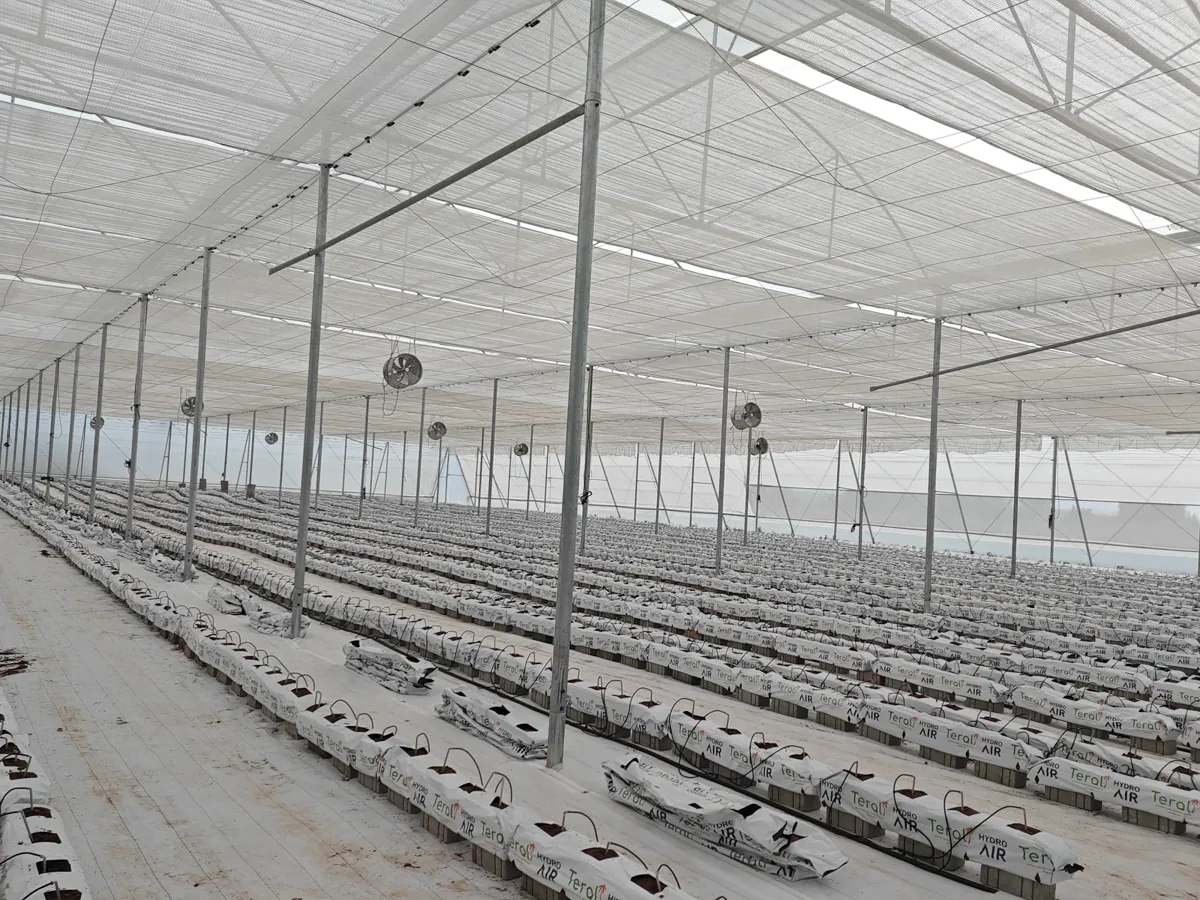
One photograph shows the growing area with the bags laid out before a substantial canopy has developed. The bags repeat along the rows, with openings in the film and irrigation tubes positioned at the planting sites. Supports beneath the rows and the access space between them are also visible.
For a buyer, this is a useful view of the product in context. Bag dimensions, planting positions and handling requirements belong in the same conversation as the greenhouse layout. The wider installation gives those purchasing decisions a useful physical context.
Explore the Teral product range or read our growbag specification guide when preparing your own project brief.
02 / The crop above the substrate
The wide crop photograph shows established cucumber plants, foliage across the rows, yellow flowers and overhead strings used in the growing system. Teral branding remains visible on the white growbags below the canopy.
This records the use of Teral products in a working protected-cultivation setting. The wide view connects the bag beneath each plant with the row it belongs to, rather than showing the substrate as an isolated product.
03 / Looking below the canopy
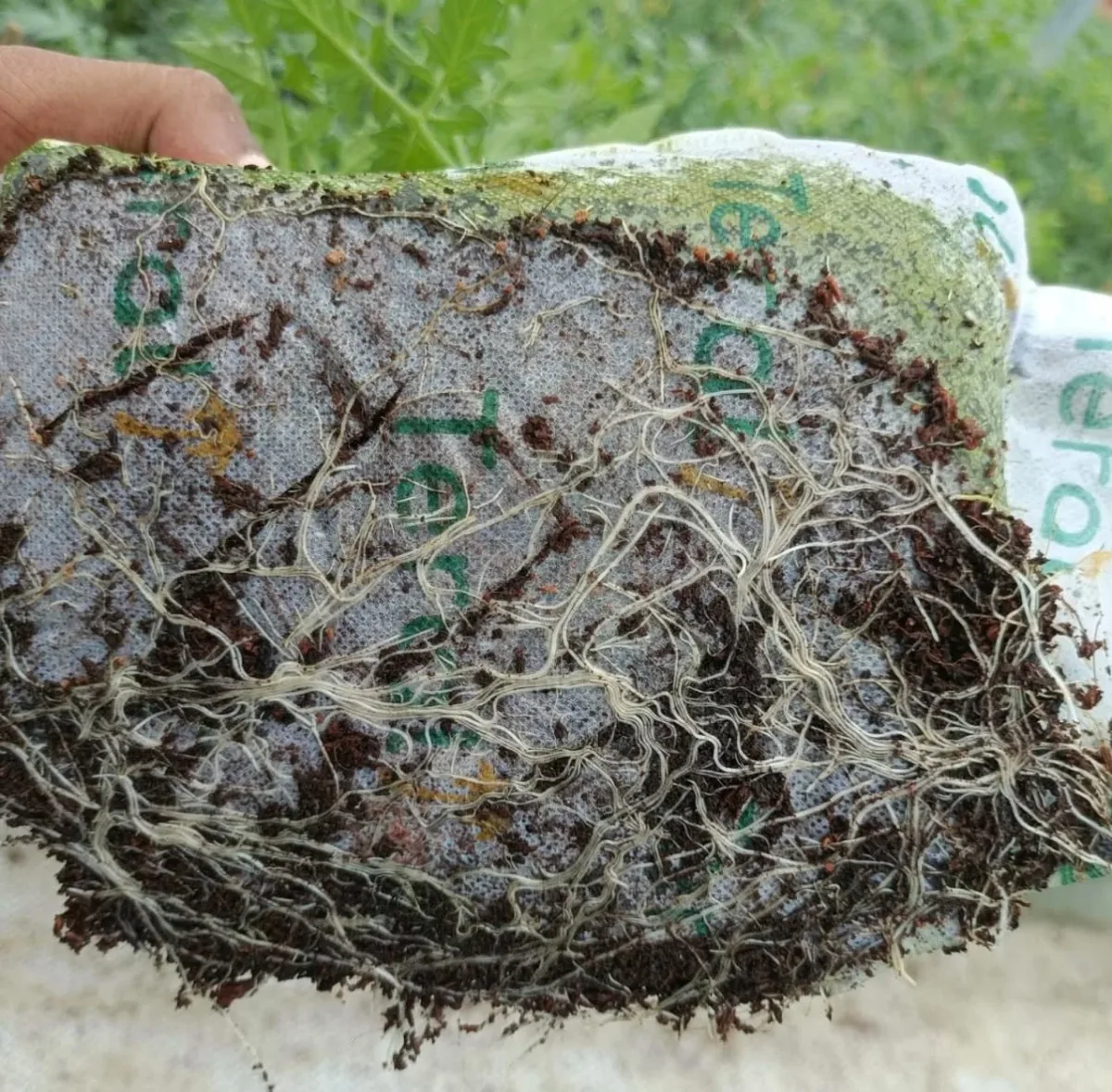
A further farm photograph turns attention to the root zone. Roots are visible around the exposed outer surface of a coir block. It provides a different perspective from the wide greenhouse views: the material and root growth can be seen at close range.
Together, the wide and close views document two sides of the same subject: growing media at the scale of a greenhouse, and growing media at the scale of a root zone.
For related formats, see Teral’s nursery and propagation products.
What buyers can take away
These photographs connect a product specification to a real growing environment. They show coir growbags used within a commercial row layout, an established cucumber crop above them, and a separate close view of root development in a coir block.
For your own project, start the discussion with the crop, growing system, required product format, planting layout and delivery destination. Share the substrate properties and test methods you need documented, so the enquiry can be turned into a clear specification.
About this case study
The photographs were supplied by Teral from its client’s farms. The separately stated portfolio acreage comes from the operator’s public farm listings, reviewed on 6 October 2026. No measured yield, cost, water-use or comparative trial data accompany this account; network size is not evidence of a performance improvement from Teral products.