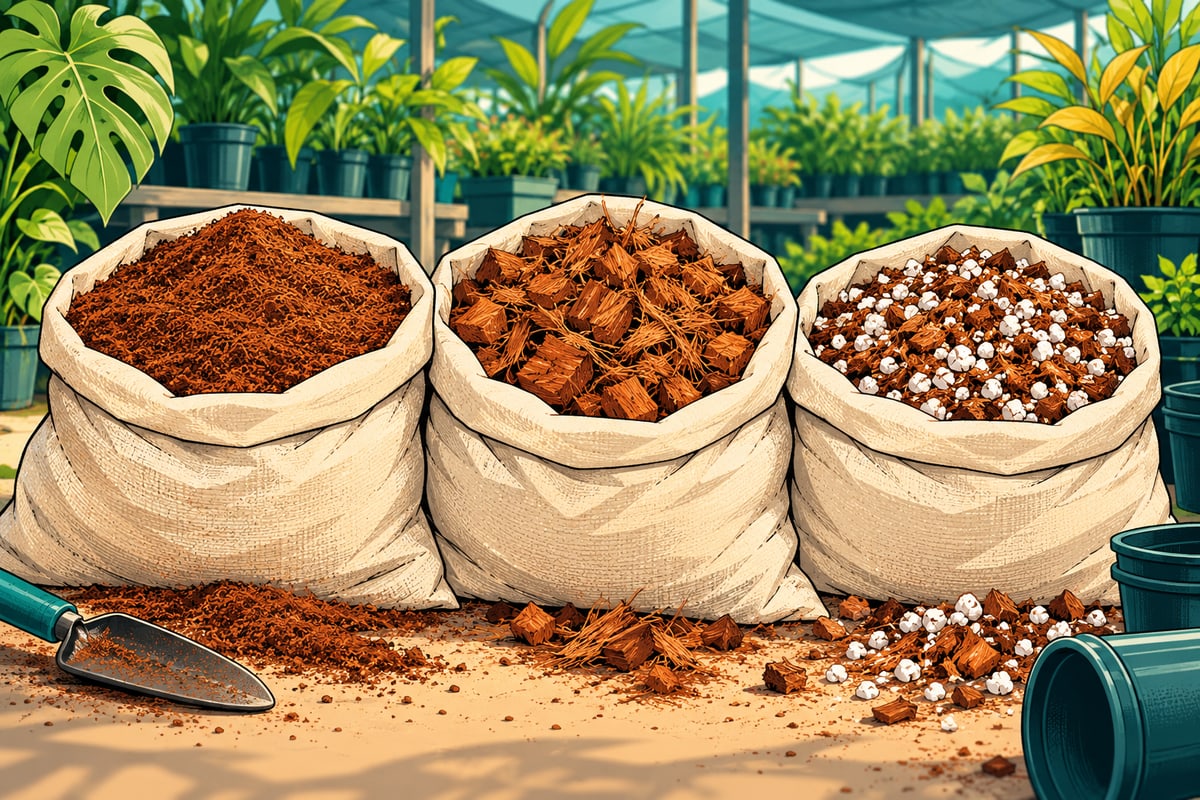

The Teral expansion options
Teral offers 5 kg cocopeat grades with nominal expansion ranges of 65–75 L and 90–100 L. Compare them using the same hydration, loosening and volume-measurement procedure.
| 5 kg cocopeat grade | Nominal expanded volume | Nominal litres per kg |
|---|---|---|
| Standard expansion | 65–75 L | 13–15 L/kg |
| High expansion | 90–100 L | 18–20 L/kg |
These are product ranges, not a claim that every coconut material expands equally. Coco chips and chips-blended blocks have their own specifications. Ask for the grade named in the quotation and the procedure used to establish its expanded volume.
Compare cost per litre, not only price per block
Suppose one block costs 100 price units and gives 70 L, while another costs 120 and gives 95 L. The first costs approximately 1.43 per expanded litre; the second costs approximately 1.26. In this illustrative comparison, the higher-priced block costs about 12% less per litre. These figures are an example, not Teral prices.
The calculation is simple: divide the landed block cost by the measured, usable expanded litres. Include freight, handling and any preparation cost on the same basis. A cheaper litre is useful only if the grade also meets the crop and system requirements.
Why volume measurement changes the result
A loosely heaped pile and a firmly filled measuring vessel do not represent the same test. RHP’s potting-reference guidance explains that filling density affects both the amount of substrate used and its physical behaviour. Record how the sample was hydrated, separated, drained and placed in the measuring container before comparing results.
For repeat orders, ask for a representative sample and agree a repeatable acceptance procedure. Keep the moisture basis beside the nominal block weight. A wet-weight comparison without that information can hide differences in the amount of dry material being purchased.
What makes a high-expansion grade possible?
High expansion is a material-and-process outcome: the recoverable volume depends on the coir structure, particle distribution, moisture condition and how compression and rehydration affect it. It is not created by simply adding more water to a measured sample. More water adds weight; the useful result is a consistent, workable substrate volume.
Teral specialises in high-expansion blocks. Discuss particle grade, treatment and expansion together rather than ordering on the litre claim alone. The coarser structure of a chips grade may serve a different purpose from a fine peat grade, even when both are sold in compressed blocks.
Put these five details in your enquiry
- 5 kg nominal weight and the agreed moisture basis.
- Required expansion range and the measurement method.
- Cocopeat, chips-blended or chips-only grade.
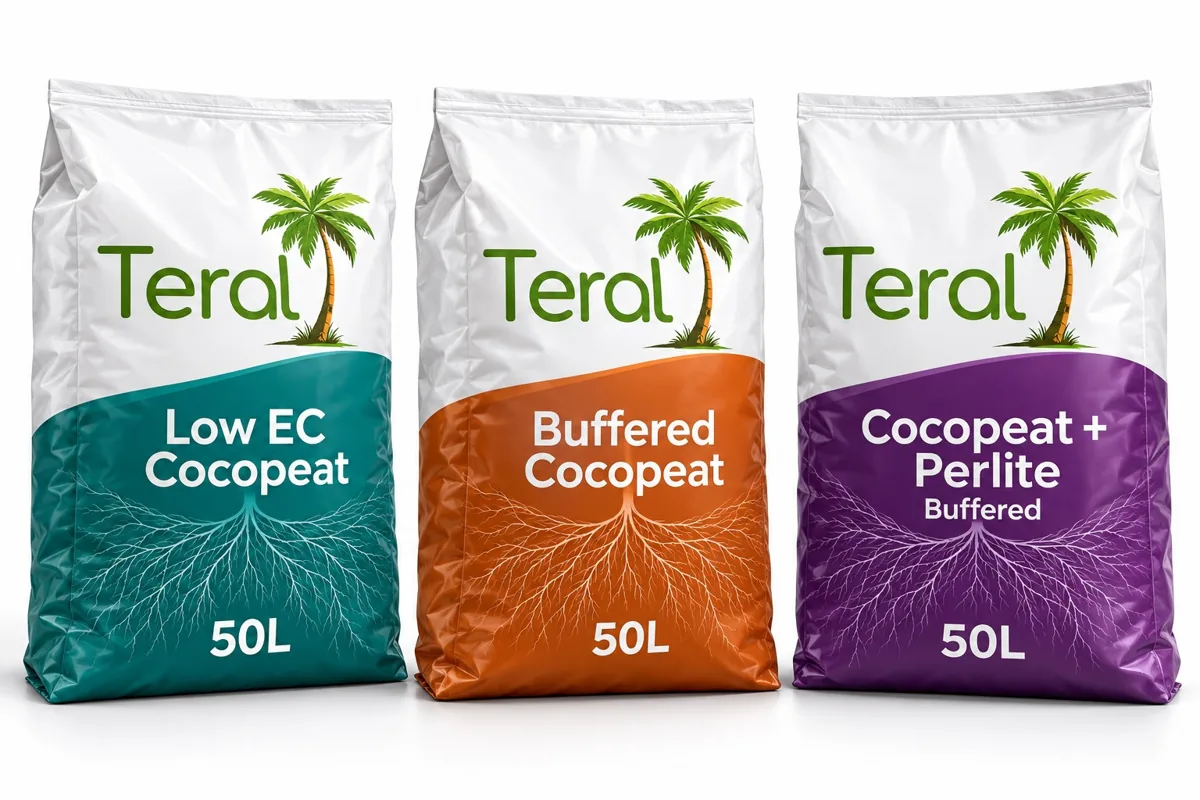
- EC requirement with its test method, and whether buffering is required.
- Quantity, packing, delivery destination and sample requirements.
For a deeper comparison of treatment labels, read our low EC versus buffered cocopeat guide. To compare filling needs, use the substrate volume planner.
Technical references
Background reading from universities and horticultural research. Teral product options are subject to the agreed order specification.